Innovation
teamLab Planets: The Sensory Experience That Reminds Us How to Feel
How Japanese engineers harnessed technology to combat the sensory anesthesia of screen-bound life.
6 min read · Sep 3, 2026
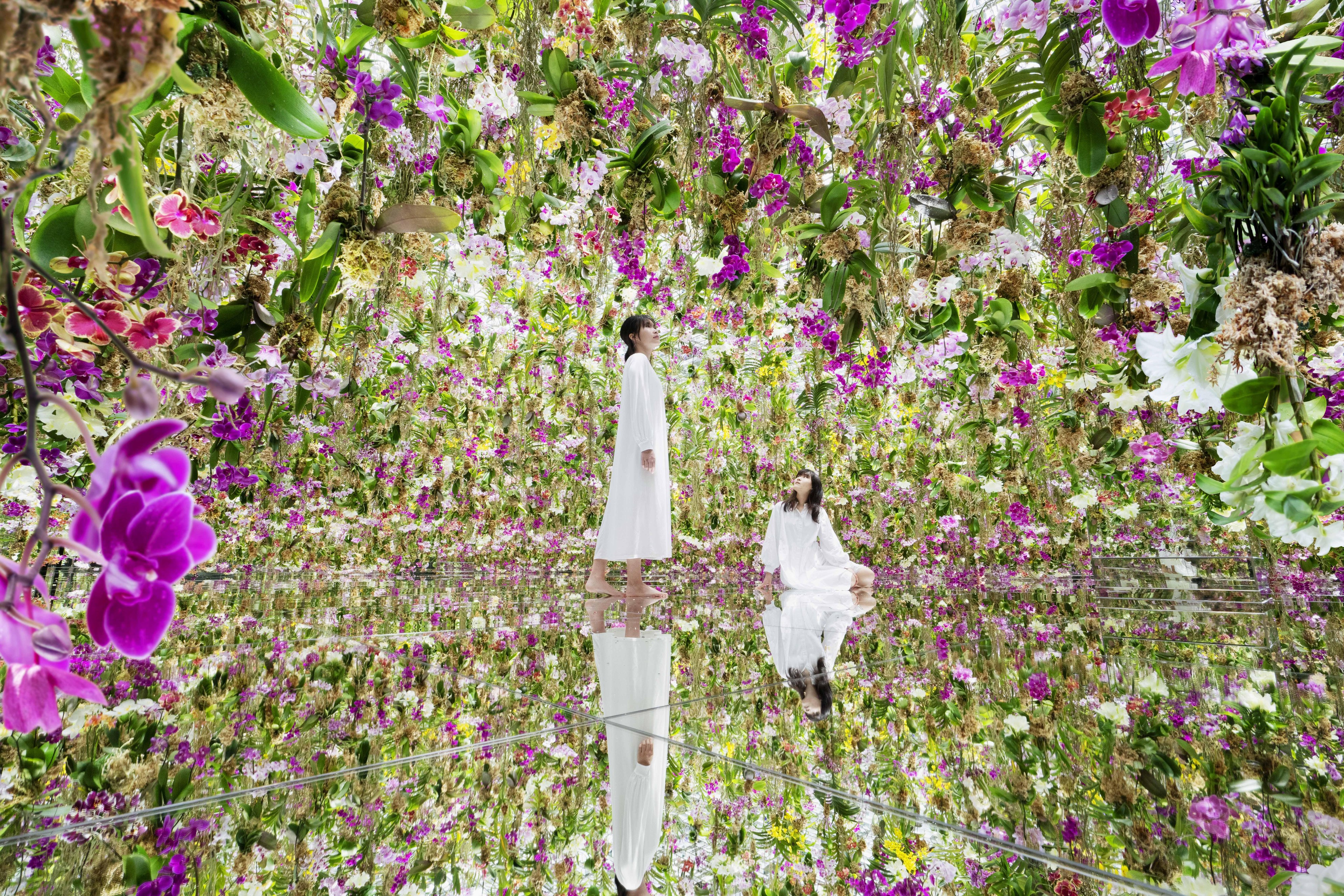
We spend the better part of our days swiping a thumb across a cold rectangle of glass. The entire design ethos behind the interfaces we use obeys a single mandate: to eliminate friction. We have grown accustomed to traversing the world without moving a muscle, to seeing without touching, to managing our entire lives on a flat surface.
This comfort comes at a rarely discussed cost: the creeping anesthesia of our senses. If the body ceases to collide with matter, it risks forgetting how the real world feels. And it was precisely in the heart of the most automated metropolis on the planet — in Tokyo’s Toyosu neighborhood — that I found something akin to an antidote.
teamLab Planets entirely rewrites the grammar of the traditional museum. There are no velvet ropes, nor the customary, whispered warnings of “do not touch.” Instead, the space recruits cutting-edge technology for a purpose almost antithetical to the norm: compelling the visitor to grapple with the weight of their own body, the thermal shock of water, and the sheer unpredictability of living matter.
The Engineering of Sensation
What kind of collective constructs a machine solely to hand us back our bodies? Founded in 2001, teamLab rejects the romantic label of “artists,” preferring to define themselves, with almost clinical precision, as “ultratechnologists” — an unusual alliance of programmers, engineers, mathematicians, and architects. When they unveiled this space in July 2018, they gave their thesis a name: body-immersive art.
The premise is clear: to obliterate the sterile boundary between the observer and the artwork. The numbers confirm that this craving is not a mere niche, but a necessity on a massive scale — between the spring of 2023 and 2024, over 2.5 million people walked through these installations, securing a Guinness World Record for the most visited museum dedicated to a single art collective.
Millions of bodies converge on this warehouse annually because the exhaustion of two-dimensionality has reached a breaking point. There is an active quest for something that demands our absolute presence, not merely our gaze.

Schools of luminous koi fish glide past visitors’ legs. Whenever someone attempts to touch a fish, the image disintegrates into an explosion of flowers swept away by the current, reacting with absolute precision to the exact trajectory of their step.
Here, passivity is a state the system simply does not permit: the algorithm registers each visitor’s position and recalculates the visual narrative based on the group’s organic volume. The body — typically a cumbersome obstacle — becomes the indispensable variable required for the artwork to unfold.
The Metallic Nest: The Tension Between Mirror and Moss
Before reaching the greenhouses, the path leads to an open-air courtyard. The landscape found there resembles the set of a silent invasion: dozens of mirrored ovoids rest upon a dense carpet of living moss.
By day, these silver shells do little more than reflect their surroundings — the damp green of the wet earth, inquisitive visitors, the fickle light of Tokyo. Yet, upon touch, the structure yields to the body’s weight, emits a deep, resonant hum, and propagates the movement to neighboring ovoids in a chain reaction.
It is machinery masquerading as biology, teaching us that every gesture has an immediate echo within the ecosystem. The stark contrast between the tactile texture of the undergrowth and the impenetrable metal of these alien “eggs” concentrates, in a single glance, the contemporary fracture between organic nature and technological ambition.
The False Eden: Nature Administered by Sensors
This harnessing of cutting-edge engineering to simulate — or impose — biological intimacy reaches its zenith in the Garden Area. Before the eyes can register anything at all, it is the sense of smell that is hijacked: the Floating Flower Garden is a living chamber that sustains over 13,000 orchids suspended above visitors’ heads.
An invisible choreography of sensors reads each person’s exact location. As they move forward, concealed motors in the ceiling hoist the orchids exclusively along their path, carving out an ephemeral void — which closes behind them as soon as they pass, surrendering the space back to the flowers.


